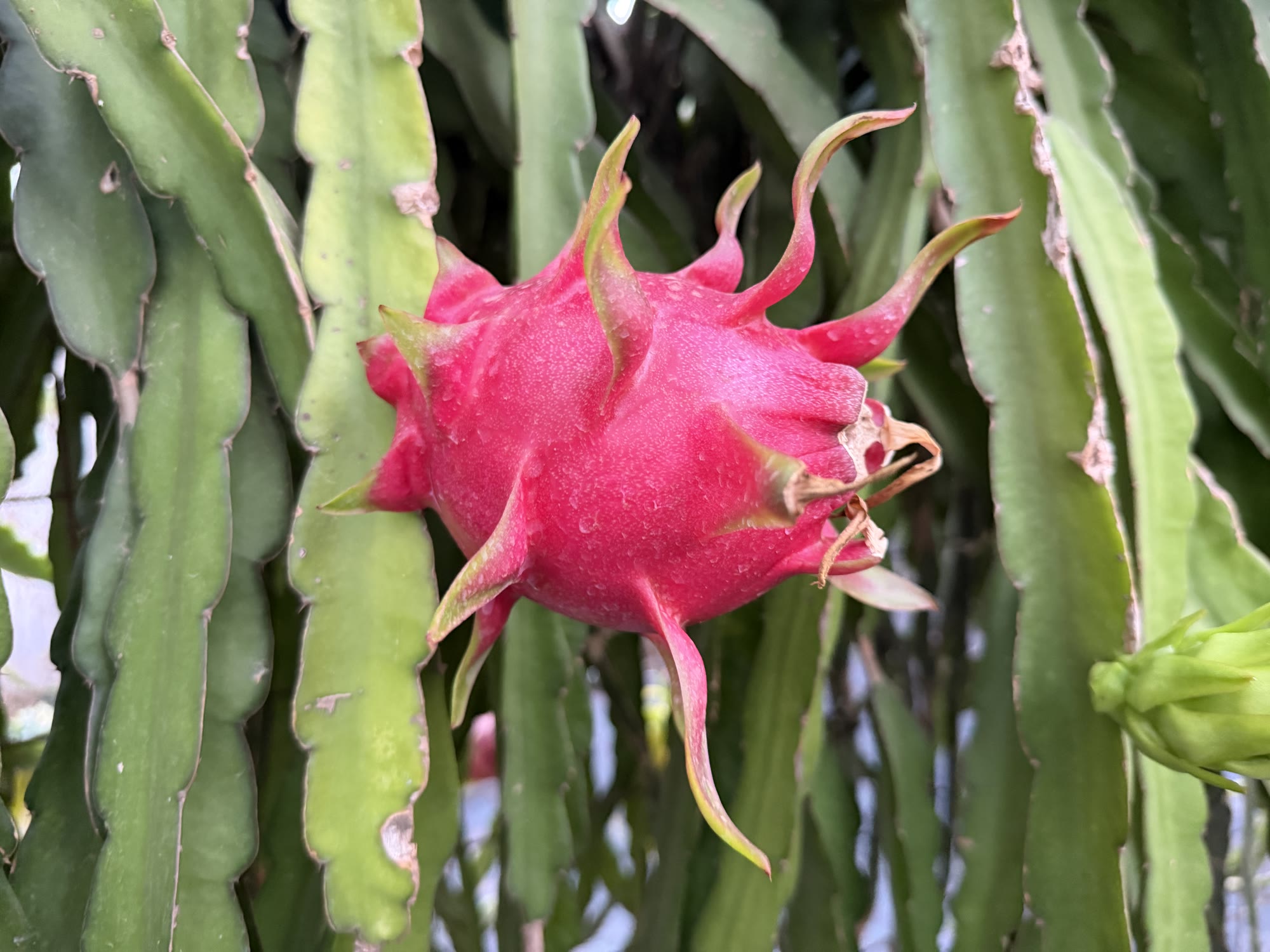
Dark Star
Híbrido comercial
- Reference colour
- Purple flesh
- Working profile
- Deep colour and a sweet profile.
Produce notebook · 01
Grown in Algemesí, Finca Les Arcades dragon fruit includes Dark Star, Halley’s Comet and Purple Haze: three varieties with distinct colours, aromas and harvest moments.
Informed buying
The retail price is indicative. We confirm availability and the final price before preparing the order.
Buy or reserve
Checking today’s availability…
We will take you to the relevant form on the main page with the fruit and format already selected.
Botanical identity
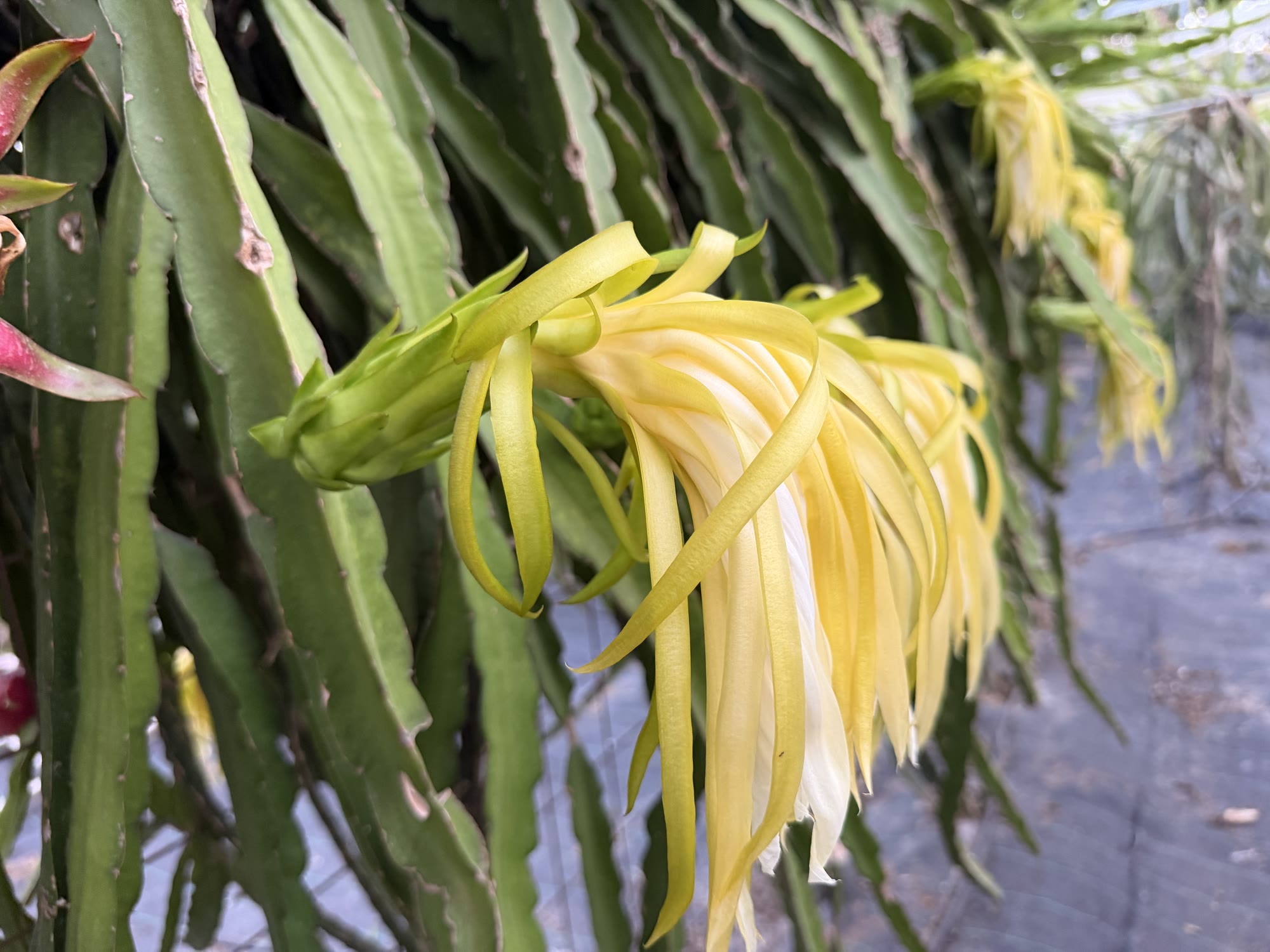
Dragon fruit is the commercial name for fruit produced by several species and hybrids of climbing cactus. Taxonomy has changed: many names formerly placed in Hylocereus are now classified within Selenicereus.
At Finca Les Arcades we grow Dark Star, Halley’s Comet and Purple Haze. Skin and flesh vary between them, and each variety brings its own colour, aroma, texture and harvest moment.
Farm varieties
Dark Star, Halley’s Comet and Purple Haze make up the current dragon fruit selection.
Cultivar selection confirmed and authorised by the grower.
Híbrido comercial
Híbrido comercial
Híbrido comercial
Individual varieties will be shipped according to availability.
Nutrition without hype
Dragon fruit is enjoyed fresh, with edible seeds and a high proportion of water. Composition varies across species, cultivars, soil and ripeness.
Keeps flesh and seeds together; this is the culinary form we prioritise.
The flesh and tiny seeds add structure to the diet.
Red varieties contain plant pigments; colour is a quality, not a therapeutic promise.
Its value belongs within a varied diet, not as a miracle ingredient.
We will not publish quantities or specific vitamin and antioxidant claims until cultivars are identified and representative harvest analysis is available.
A chef’s reading
Chilling sharpens the bite, salt wakes up sweetness and brief acidity brings order. Overly sweet preparations erase its personality.
Farm recipes
Designed for four and adaptable to a home kitchen. The fruit should be ripe, chilled and freshly cut.
A transparent, savoury and deeply fresh starter.
Chef’s noteAdd lime immediately before serving to protect the texture.
View full recipeLactic, crunchy and gently peppery contrast.
Chef’s noteHoney is an accent; dragon fruit must remain the lead.
View full recipeA clean, fragrant dessert with measured sweetness.
Chef’s noteTaste before sweetening: no two harvests ask for the same amount.
View full recipeCulinary and educational content; it is not individual nutritional or medical advice.